 When comparing HVAC systems, the lowest purchase price doesn't always mean the best investment.
For homeowners, energy consumption directly affects monthly utility bills. For HVAC contractors and distributors, equipment efficiency can influence project competitiveness, customer satisfaction, and long-term business opportunities.
This is where the difference between ENERGY STAR-certified and standard HVAC equipment becomes important.
But is a higher-efficiency system really worth the additional investment? Let's look beyond the certification label and examine the actual value.
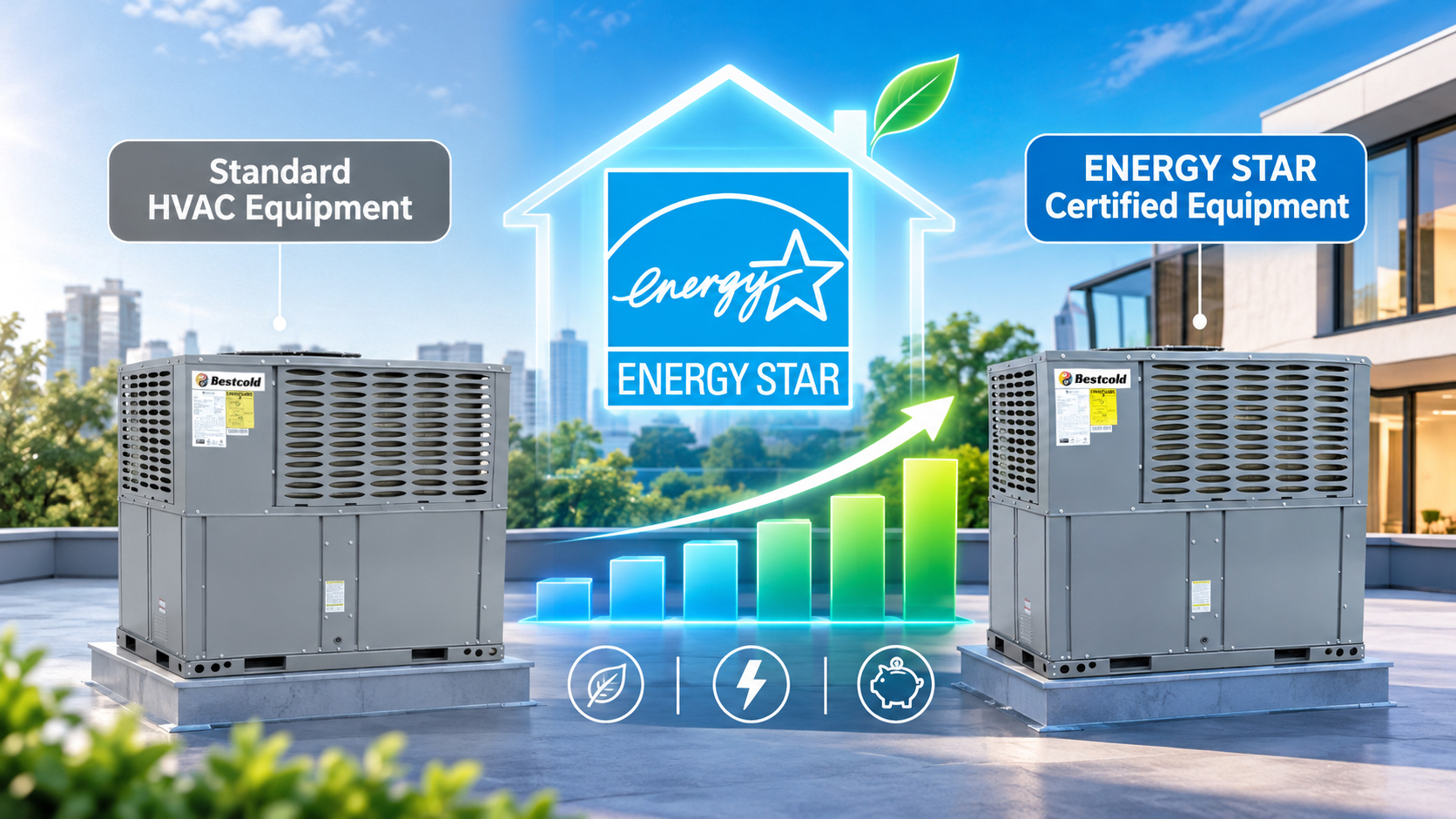 ENERGY STAR vs. Standard HVAC Equipment: Understanding the Value of Higher Efficiency
1. Higher Efficiency Means Lower Operating Costs⚡
The most obvious difference between ENERGY STAR certified and standard HVAC equipment is energy performance.
Standard HVAC systems can meet applicable federal minimum efficiency requirements, but ENERGY STAR certified models must meet additional efficiency criteria established by the EPA.
For residential central air conditioners and heat pumps, efficiency is commonly measured using:
SEER2: Measures seasonal cooling efficiency.
EER2: Measures cooling efficiency under specific operating conditions.
HSPF2: Measures seasonal heating efficiency for heat pumps.
Generally, higher ratings indicate that a system can deliver more heating or cooling output per unit of electricity consumed.
For example, a higher-SEER2 air conditioner can provide the same cooling output while using less electricity than a comparable lower-efficiency model under rated conditions.
Over several cooling seasons, these efficiency improvements can translate into meaningful operating cost reductions, particularly in regions with long cooling seasons or high electricity rates.
2. The Real Value Is in Long-Term Ownership Costs📊
The goal isn't simply to sell a more expensive system. It's to help customers make a better long-term investment.
One common mistake when purchasing HVAC equipment is focusing exclusively on the initial equipment price.
A more practical approach is to evaluate the total cost of ownership.
This includes:
💰 Initial equipment and installation costs
💰 Monthly heating and cooling expenses
💰 Routine maintenance
💰 Expected equipment lifespan
💰 Potential repair and replacement costs
A higher-efficiency system may cost more upfront, but lower energy consumption can help offset that difference over time.
For homeowners planning to stay in their properties for many years, this calculation is especially important.
For HVAC contractors, explaining the long-term operating cost difference can also help customers understand why the lowest-priced equipment isn't necessarily the most economical choice.
3. Efficiency Ratings Matter, But Climate Matters Too❄️🔥
Contractors should evaluate local climate conditions, building insulation, ductwork, heating and cooling loads, and equipment specifications before recommending a system.
Higher efficiency doesn't automatically mean a system is the right choice for every property.
North America's diverse climate conditions make equipment selection particularly important.
For example:
Hot climates: Cooling efficiency and performance under high outdoor temperatures deserve greater attention.
Cold climates: Heat pump heating capacity and low-temperature performance become critical.
Mixed climates: Seasonal heating and cooling efficiency should both be considered.
These systems must meet additional low-temperature performance requirements, making them particularly relevant for homeowners in colder regions. For heat pump applications, ENERGY STAR also recognizes qualifying Cold Climate Heat Pumps.
The right system is not necessarily the one with the highest efficiency rating. It's the one that delivers reliable performance under actual operating conditions.
4. Why Higher-Efficiency Equipment Matters to HVAC Contractors and Distributors
Efficiency is more than a product specification. It's also a valuable selling point.
As homeowners become increasingly conscious of electricity costs, contractors and distributors have an opportunity to differentiate their offerings through energy-efficient HVAC solutions.
Here are three ENERGY STAR-certified practical advantages:
Stronger Value Propositions
Instead of competing solely on equipment price, contractors can present customers with a comparison of initial investment, estimated energy consumption, and long-term operating costs.
More Competitive Product Portfolios
Offering different efficiency levels allows distributors to serve customers with varying budgets, property requirements, and performance expectations.
Better Project Positioning
Energy efficiency can be an important consideration in residential upgrades, new construction, and commercial HVAC projects where operating expenses matter over the long term.
For HVAC businesses, the ability to explain efficiency in practical terms can strengthen customer confidence and support better purchasing decisions.
5. How to Decide Whether an ENERGY STAR HVAC System Is Worth It ⬇
Before choosing between standard and ENERGY STAR certified equipment, consider these factors:
|
Evaluation Factor
|
What to Consider
|
|
Initial Cost
|
How much more does the higher-efficiency system cost?
|
|
Electricity Rates
|
Are local utility rates relatively high?
|
|
Operating Hours
|
How frequently will the system run?
|
|
Climate
|
How demanding are local heating and cooling conditions?
|
|
Installation Quality
|
Is the system properly sized and installed?
|
|
Long-Term Plans
|
How long will the equipment remain in service?
|
Final Thoughts: Look Beyond the Purchase Price
ENERGY STAR certification is a useful benchmark; the difference between ENERGY STAR certified and standard HVAC equipment goes beyond a label.
Higher-efficiency equipment can offer lower operating costs, better long-term value, and a stronger product proposition for HVAC professionals.
Whether you're upgrading a residential system, expanding your HVAC distribution business, or sourcing equipment for upcoming projects, understanding efficiency is essential to making informed decisions.
🔍Looking for High-Performance HVAC Equipment?
At Bestcold, we offer a range of HVAC solutions designed for residential and commercial applications, including inverter mini-split systems, heat pumps, multi-zone systems, and commercial HVAC equipment.
We work with HVAC distributors, contractors, and project partners to provide flexible product options, OEM/ODM support, and dependable supply solutions.
Looking for the right HVAC equipment for your market?
Contact Bestcold to explore our product range and discuss your next HVAC project.